Farm and field fence.
Woven wire, high-tensile, split rail and board fence. Long runs, real corners, and line runs measured off the deed rather than off the tree line.
- Woven wire and high-tensile
- Split rail and board fence
- Corners braced for the pull
- From $9 per foot
Four different fences that get quoted off the same visit, because the question is always the same: what is the fence holding, and how far does it run.
- Woven wire — a wire grid on posts. The general-purpose answer for livestock and for keeping things out of a field or a garden.
- High-tensile — smooth strands stretched tight between braced ends. The cheapest way to fence a long boundary, and the one most dependent on the end assemblies being built properly.
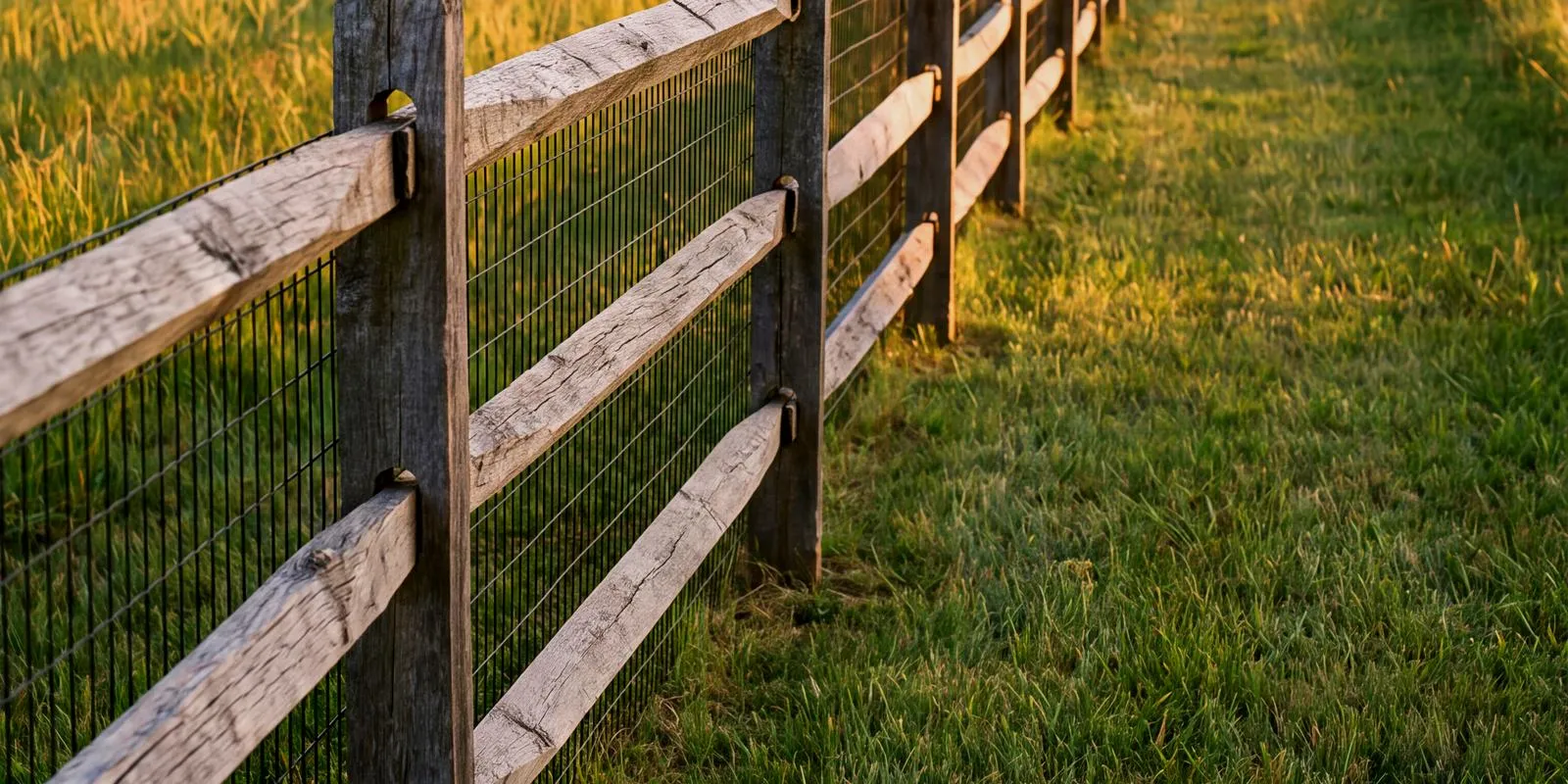
- Split rail — two or three rails through heavy posts. Mostly decorative on a residential property line; add wire mesh behind it and it will also hold a dog.
- Board fence — flat boards on posts, the horse-pasture look, and the most expensive of the four per foot.
On long runs the corners and ends carry the whole fence. A braced corner assembly is what keeps a stretched wire fence tight in year five instead of sagging in year two.
Lines, gates and access
- We run the line off the deed, not off where the old fence or the tree line happens to sit. If the survey pins are findable we use them
- Farm gates in the widths equipment actually needs — a gate that a tractor or a trailer cannot get through is the most common thing we get called back to widen
- Walk gates where people cross rather than machinery
- Corner and end assemblies braced for the pull of the run
- Split rail with wire mesh behind it, where the fence has to be decorative and still contain something
If the boundary is shared, it is worth talking to the neighbour before we set posts. We will flag it if a line looks contested, but we are not surveyors and we do not settle boundary disputes.
What moves the price
- Which of the four fences it is — the spread between high-tensile and board fence is large
- Post spacing and post size, which is set by what the fence has to hold
- Number of corners, ends and gates; a square field with four corners is cheap per foot, a jagged boundary is not
- Terrain: hills, wet ground, creek crossings, rock
- Clearing the line before posts can be set
- Total footage — the per-foot number comes down on a long, straight run
Farm fence is where the cheapest per-foot number on the site lives, and also where footage gets big enough that the material choice is the whole budget.
Life and upkeep
Wire fence wants walking once a season. Strands loosen, posts shift after a wet spring, a limb comes down across a run. Caught early these are small fixes; left alone they become a re-stretch.
Wood rails and boards weather grey like any untreated wood and can be stained if you want them to stay looking new. The posts and the end assemblies are what determine how long the fence stands.
Before you call
Two things make the estimate faster and the number tighter.
- Roughly how many feet, even paced off. Farm runs are long enough that the material choice changes with the footage.
- What the fence is holding — livestock, a dog, deer out of a garden, or nothing at all beyond marking the line. That answers the height, the spacing and half the material decision before we get there.
PA One Call goes in before every dig, including on open ground.
Fencing acreage rather than a yard?
Farm work gets quoted on footage, terrain and what the fence is holding. Compare the six, or just have us walk the line.
Get a number on the run.
Free on-site estimate. Tell us roughly how many feet and what the fence has to hold, and we will walk the line with you.
Rather talk? (814) 555-0143
Free estimate
We don't sell your information. One call to schedule, and that's it.